Letting and operating of its own and leased stock, short-stay accommodation, and management of property on a fee basis.
382 Kenton Road, Harrow · Company No. 17428184
OpeningSchedule of contents
This page is laid out as a building and read from the pavement up: the ground plate, four shelves,
the roof. Each shelf is a length of tenure, and the three registered activities divide along the
same line.
What separates one plate from the next is not floor area. It is how often the door is re-let.
Six plates. Only the five above the desk carry a tenure.
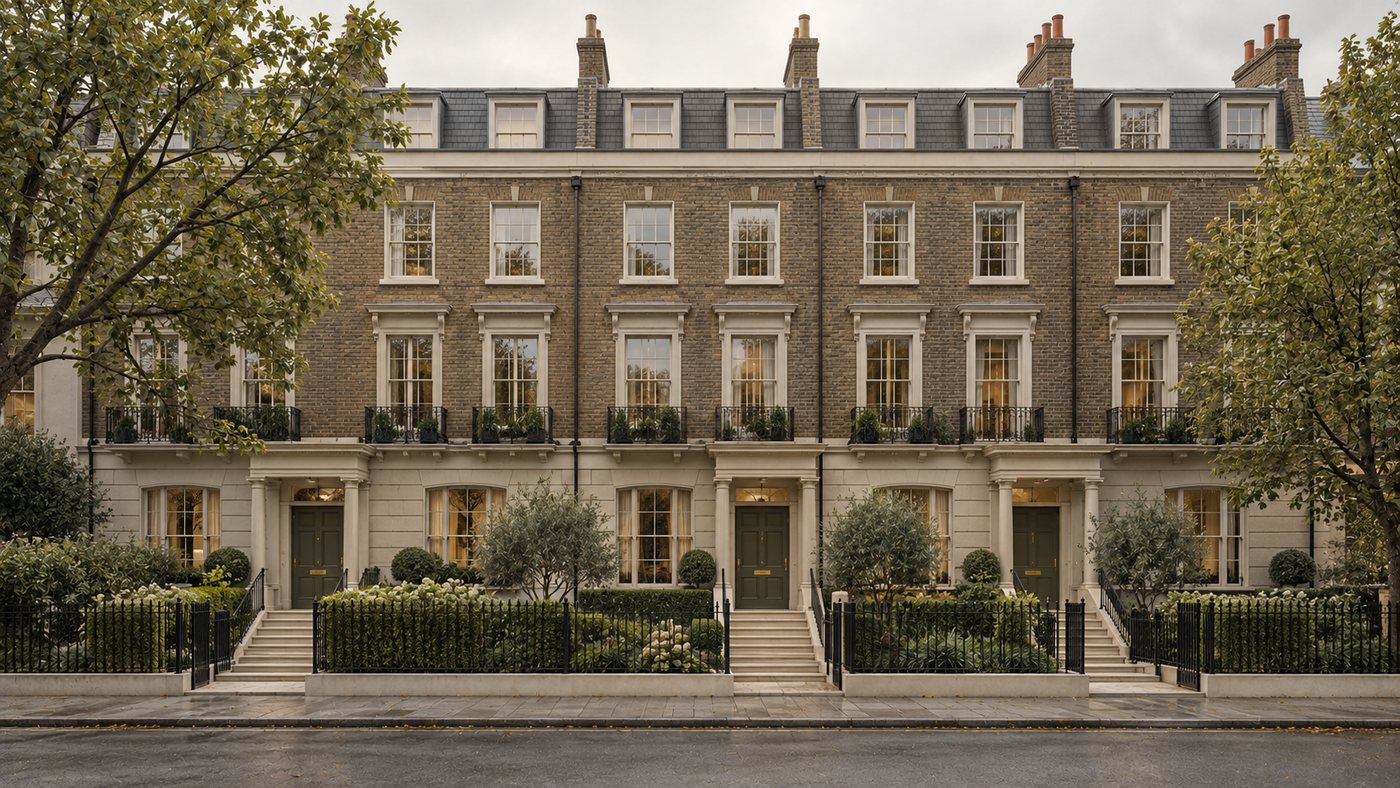
ElevationA terrace of four storeys, read from the street
The shape of a terrace decides the work. One stair and one hall serve every flat, so a
third-floor departure comes down past two front doors; dormers mean the top plate has sloped
ceilings and its own alarms.
An illustrative architectural view drawn for this page. Not a photograph of
a building this company owns, manages or lets.
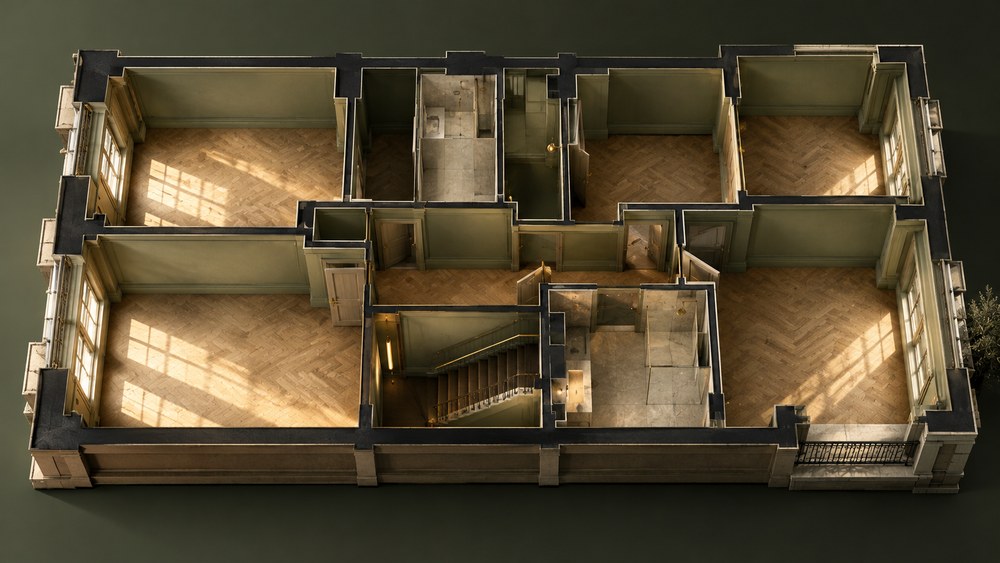
SectionThe stack, plate by plate
The same building as the page uses it: a section, bottom up, activity
marked against each plate. The control beneath walks the four shelves.
Three residential plates, not four: nightly and weekly share one
floor, and only the changeover count separates them.
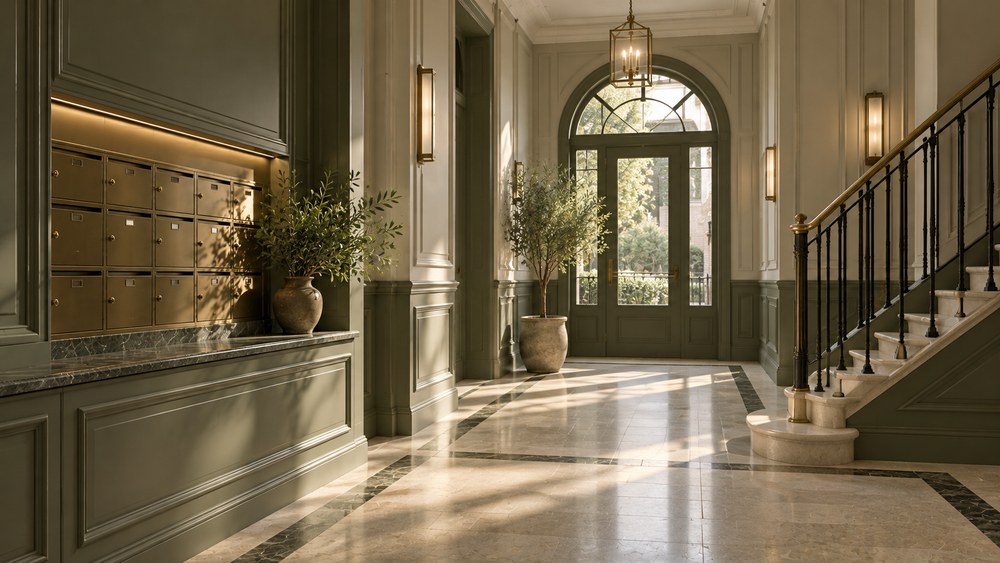
Two storeys of one house, set side by side because the office treats them as opposites.
The plate that is let Bare, because that is the state a
schedule of condition records: boards, reveals, sills, nothing standing on them.The plate nobody lets The hall, the letterboxes, the
first flight: in no tenancy and on no booking, crossed by every arrival and every contractor.
Both illustrative drawings made for this page, not photographs of premises
this company holds.
SchedulePlate, tenure and registered activity
Plate and shelfTenure and activity
Ground — the desk
no tenure; acting for an owner, SIC 68320
Shelf 1 — nightly
one to six nights, SIC 55209
Shelf 2 — weekly
seven nights and over, SIC 55209
Shelf 3 — month to month
rolling period, SIC 68209
Shelf 4 — assured shorthold
fixed term, SIC 68209
Roof — certificate line
over all four shelves
Every ledger here carries dates, counts and durations. None carries an
amount.
Ground plateInstruction, keys and the reporting line
Nothing on this plate is let. The company acts for somebody else,
and the key that opens a door from it belongs to the owner.
An owner writes with an address and what they want done with it; a management agreement sets the
scope before any key changes hands. Keys are then held at 382 Kenton Road on a tag carrying the
number and nothing else, because a tag naming an address tells a finder where to go.
Contractors are instructed in writing against a described fault, access on the same order, so
orders are raised per fault, not per visit. The owner is sent a statement on the agreed cycle.
Shelves 1 and 2Nightly and weekly, counted in turns
One floor, one linen store, one key safe. Six two-night bookings and one twelve-night booking
fill the same twelve nights, but the first needs six cleans and six codes.
Nightly — one to six nights
A booking makes a guest, not a tenant: no tenancy, no deposit scheme, no notice period. An
arrival window, a departure time, a changeover between.
Entrance code reset at each departure
Weekly — seven nights and over
The same flat behaves differently: one changeover covers the booking, linen is set once, any
mid-stay service is agreed rather than imposed.
One turn, whatever the length
The turn itself
Strip, clean, re-set the linen, check the inventory, re-code the door. Step three sets it out
hour by hour.
Worked as hours, never as a rate
Shelves 3 and 4Month to month, and the fixed term above it
Shelf 3 — a rolling period
The third plate is let, not occupied. Rent is payable monthly in advance on a stated day, the
period runs from that day, and notice is given by the period, not the calendar month. No servicing,
no linen.
The flat is the company's own or leased stock, which the ground plate never is.
Shelf 4 — a fixed term
The top plate is a term with a date on which it ends. Before the keys move: a right to rent check,
the government guide for tenants, an energy performance certificate, the gas safety record, the
electrical installation condition report.
It sits on the rolling plate for a reason: an assured shorthold neither renewed nor ended becomes
the plate below.
RoofThe dates that cap every plate
Certificates belong to the building, not to a tenure. They expire on dates unrelated to when
anybody moved in, so they are diarised from issue and never from the let.
That is why the roof is drawn across all four plates: one run of dates caps a two-night booking
and a four-year tenancy.
Step seven sets all three on one scale, so a flat reads at a glance.
Sheet AOccupancy and changeover planner
A month of bookings can be full and still impossible: the only empty hours are those between a
departure and the next arrival. A same-day turn is worked as six hours, ten until four; one on a
void night as ten.
Guide only — arithmetic from the figures entered
Sheet BTenure comparison sheet
One pattern is counted in nights and the other in months, so neither sits beside the other until
both are nights. The sheet converts on a thirty-night month, printed in every line because a month
is not a constant.
Read down a column first and then across. The busier pattern is not automatically the fuller one:
a short-stay column can carry seventy turns in a year and still stand empty for more nights than the
assured column beside it. The turns are the work; the void nights are the cost of it.
Short-stay pattern
Period 12 × 30 = 360 nights
Occupied 18 × 12 = 216
Void 360 − 216 = 144
Turns ceil(216 ÷ 3) = 72
Assured pattern
Period 12 × 30 = 360 nights
Occupied 11 × 30 = 330
Void 360 − 330 = 30
Turns one per tenancy = 1
Over 360 nights the assured column is occupied 114 nights
longer, and the short-stay column carries 71 more changeovers — each one a clean, a linen set
and an inspection.